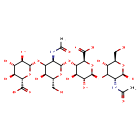
Hyaluronic acid is a glycosaminoglycan used for the relief of joint pain, wound healing, ophthalmologic treatment, cosmetic treatment, and various other applications. Hyaluronic acid (HA) is an anionic, nonsulfated glycosaminoglycan found in connective, epithelial, and neural tissues; it was first isolated in 1934.
- Mechanism
- Curator reviewed · 10 references
General principles and hyaluronic acid receptor binding
Hyaluronic acid works by two basic mechanisms: serving as a passive structural molecule or serving as signaling molecule, depending on the molecule size. The physicochemical properties of high molecular weight HA contribute to passive structural effects, demonstrating hygroscopicity and viscoelasticity and improving hydration, water balance, and structural integrity. As a signalling molecule interacting with proteins, HA causes several opposing effects based on molecular weight: pro- or anti-inflammatory effects, promotion or inhibition of cell migration, and activating or inhibiting cell division.
Hyaluronic acid exerts its therapeutic effects through binding to three primary types of cell surface receptors: CD44 (a membrane glycoprotein), the receptor for hyaluronate-mediated motility (RHAMM), and the Intercellular Adhesion Molecule 1 (ICAM-1). CD44 is considered the most widely distributed receptor for hyaluronic acid, demonstrating cellular interactions with osteopontin, collagen, and matrix metalloproteinases (MMPs). High and low molecular weight hyaluronic acids demonstrate differing molecular and cellular mechanisms in their interaction with CD44 receptors. Some examples of these effects include modification of chondrocyte survival pathways in addition to alteration of apoptosis pathways. Lymphatic vessel endothelial hyaluronan receptor (LYVE-1), and hyaluronic acid receptor for endocytosis (HARE), (also known as Stabilin-2) also bind to hyaluronic acid.
Hyaluronic acid for skin conditions and cosmetics
Hyaluronic acid's anionic proprieties cause it to attract water and induce swelling, increasing tissue volume and skin structural integrity. The aging process is associated with reduced production of skin hyaluronic acid and collagen, causing the appearance of wrinkles and the loss of facial volume. Dermal fillers of hyaluronic acid replace lost tissue volume, imparting a full and youthful appearance to skin that has lost its elasticity. Hyaluronic acid fillers contain cross-linked hyaluronic acid particles, rendering a concentrated substance with resistance to various forms of physical and chemical breakdown. The cosmetic benefits of hyaluronic acid filler may last up to 6 months, depending on the brand and technique used for injection. Additionally, dermal hyaluronic acid fillers are known to increase the production of fibroblasts, supporting wound healing and offering relief from irritating and inflammatory skin conditions.
Hyaluronic acid for joint pain
Most cells in the human body are capable of synthesizing HA. It is a primary component of the extracellular matrix (ECM) and can be found in bone marrow, cartilage, and synovial fluid in joints. In osteoarthritis, the concentration of naturally occurring hyaluronic acid gradually decreases, lowering the viscosity of synovial fluid that protects joints from excess friction. Administration of intra-articular hyaluronic acid increases viscosity of synovial joint fluid, reducing friction and subsequently relieving painful arthritic symptoms.
Hyaluronic acid for ophthalmic conditions and ophthalmological procedures
Solutions of hyaluronic acid with a concentration greater than 0.1% moisturize the surface of the eyes to treat symptoms of dry eye while improving the stabilization of tear film, replenishing deficiencies of HA, reducing friction, and preventing binding of foreign substances to the ocular tissue. Hyaluronic acid is frequently used during and after ophthalmological surgeries and plays important roles by virtue of its moisturizing, viscoelastic, and protective properties. It promotes tissue healing of the corneal epithelium and other parts of the eye following ophthalmological surgery, minimizing the risk of adhesions and free radical formation.
- Primary indication
- The intra-articular preparations of hyaluronic acid are indicated for knee pain associated with osteoarthritis.Curator reviewed · 37 structured indications
- Formula / weight
- C28H44N2O23 · 776.6486 g/mol (avg)
- First approval
- United States, 2002
- Also known as
- Hyaluronan · Hyaluronate
Resolves to
KIUKXJAPPMFGSW-MNSSHETKSA-NSMILESCC(=O)N[C@H]1[C@H](O)O[C@H](CO)[C@@H](O)C1O[C@@H]1O[C@@H]([C@@H](O[C@@H]2O[C@H](CO)[C@@H](O)C(O[C@@H]3O[C@@H]([C@@H](O)[C@H](O)[C@H]3O)C(O)=O)[C@H]2NC(C)=O)[C@H](O)[C@H]1O)C(O)=OWhat you can answer from here — as of August 31, 2026
Which drugs share a target with Hyaluronic acid, and which of those have an active Phase 3 trial?
Create a free account or log in to explore the full data card.
Create Account